

Diversity is a strength because it draws from various perspectives, not because it centers on one aspect of identity. This message needs consistent reinforcement to shift perceptions. The deliberate simplification of diversity’s definition only puts working-class people against each other.
The misunderstanding of diversity as being limited to race likely stems from several societal, historical, and communication challenges:
1. Historical Context
- Civil Rights Legacy: Diversity discussions often began with racial equity due to historical injustices like slavery, segregation, and systemic racism.
- Policy Framing: Early affirmative action policies and diversity initiatives focused heavily on race to address those specific inequities.
2. Simplification in Messaging
- Media Narratives: Public messaging often oversimplifies diversity as primarily race-related, overshadowing other aspects.
- Lack of Nuance: The complexity of diversity—encompassing gender, age, disability, socioeconomic status, sexual orientation, religion, and more—is sometimes too nuanced for broad campaigns.
3. Cultural Resistance
- Fear of Change: People may feel uncomfortable or threatened by discussions of diversity if they misunderstand it as prioritizing one group over others.
- Us vs. Them Thinking: Some interpret diversity efforts as excluding or undervaluing certain groups, particularly those in majority demographics.
4. Organizational Approach
- Incomplete DEI Training: Companies often focus on race and ethnicity because it is a visible and measurable starting point, neglecting a more holistic approach.
- Metrics and Quotas: Overemphasis on racial representation metrics can inadvertently signal that diversity is only about race.
5. Personal Biases and Lack of Awareness
- Implicit Bias: People may unknowingly hold biases that skew their understanding of diversity.
- Limited Exposure: Those in homogeneous environments may equate diversity with visible differences like race rather than more subtle forms of diversity.
How to Broaden Understanding
- Education and Communication: Highlight that diversity includes all dimensions of identity, including thought, life experiences, and backgrounds.
- Intersectional Approaches: Emphasize how diversity encompasses multiple, overlapping identities rather than single categories.
- Inclusive Language: Use phrases like “diversity includes everyone” to clarify that the concept is broad and universal.
- Leadership Advocacy: Leaders should exemplify and articulate a wide-ranging view of diversity in both policy and practice.
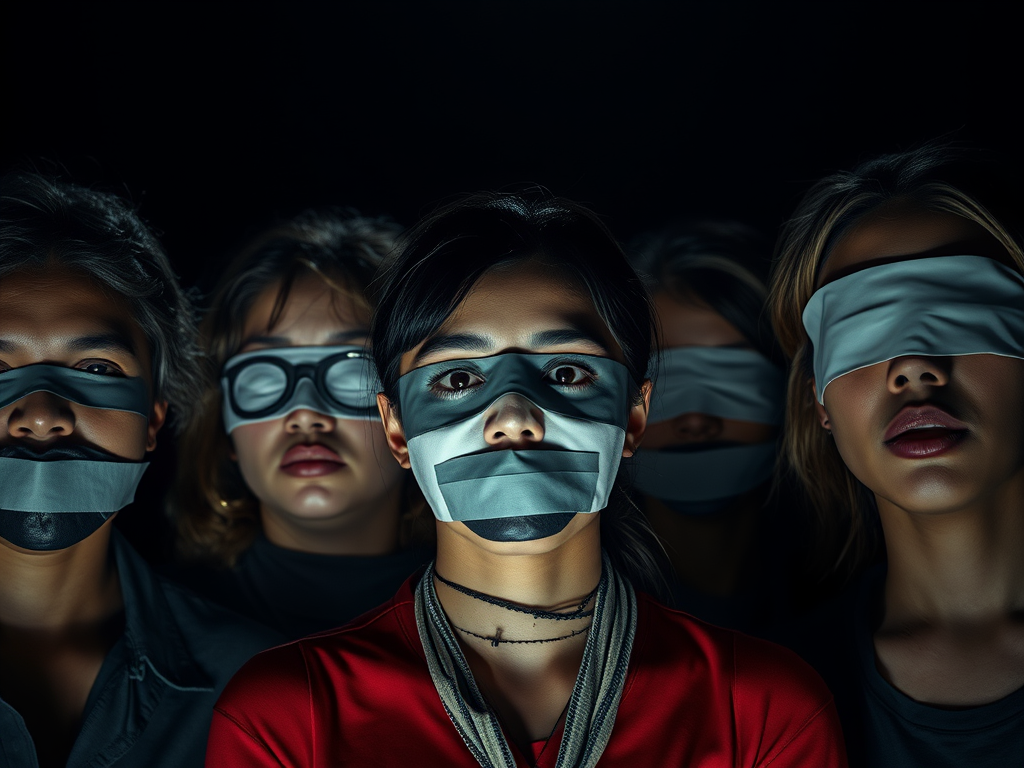
Several organizations, including Walmart and Tractor Supply Company, have recently scaled back their Diversity, Equity, and Inclusion (DEI) initiatives. This shift can be attributed to several factors:
- Political and Legal Pressures: The U.S. Supreme Court’s decision to end affirmative action in college admissions has intensified scrutiny of corporate DEI programs. Companies are reassessing these initiatives to mitigate potential legal challenges. Associated Press
- Activist Influence: Conservative activists, such as Robby Starbuck, have campaigned against DEI policies, urging companies to discontinue them. This activism has led some corporations to reevaluate and reduce their DEI commitments. The Times
- Economic Considerations: In challenging economic climates, businesses may prioritize cost-cutting measures. DEI programs, often viewed as non-essential expenses, are among the first to be reduced or eliminated.
- Public Backlash: Some DEI initiatives have faced criticism for being divisive or ineffective. Companies may scale back these programs to avoid alienating specific customer segments or to maintain a neutral public image. New York Post
- Shifts in Corporate Strategy: Organizations may choose to focus on core business operations, viewing DEI efforts as peripheral. This strategic realignment can deprioritize DEI initiatives.
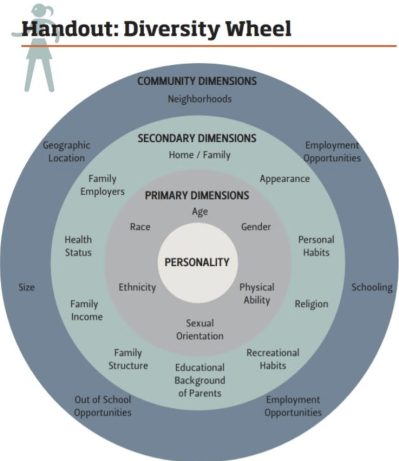
Source: Goode, Yolanda. 2018. “The Subtle Differences Series: Diversity | 4-H in the Panhandle.” Ufl.edu. 2018. https://nwdistrict.ifas.ufl.edu/4hn/2018/08/10/the-subtle-differences-series-diversity/.
We all possess a unique dimension of difference because each of us is distinct. This diversity is what some are attempting to suppress. When we also consider systemic racism, sexism, and ableism, it creates a situation where leaders may seek to stifle anything that does not align with their “desired” norms.



 Adventures of a Lonely, Bookish, Black Girl
Leave a Reply